ByJohn A
How Intelligent Data Capture Automates Workflows
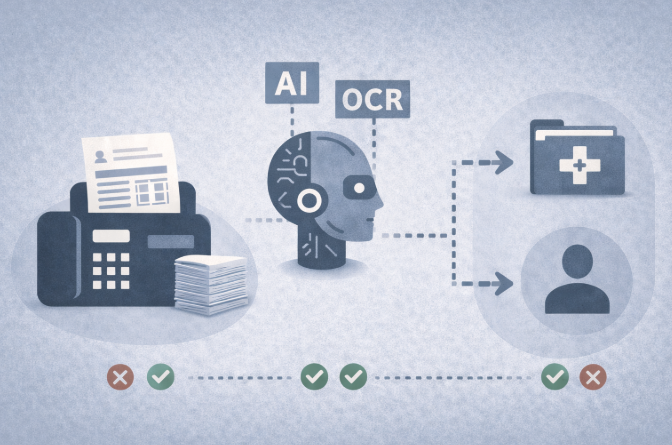
Intelligent Data Capture acts as the connective tissue between inputs and automated processes. It converts unstructured information into structured signals that trigger real-time orchestration. By harmonizing formats, signals, and events, it reduces latency while maintaining provenance for governance. Cross-silo recognition and validation create a unified data fabric, enabling scalable, repeatable patterns. The result is a foundation for iterative refinement and compliant automation that accelerates decision-making—leaving a clear path for the next steps to be taken.
What Intelligent Data Capture Is Doing for Workflows
Intelligent data capture acts as the connective tissue between input sources and automated workflows, translating unstructured data into structured, actionable signals with precision and speed.
It enables workflow integration by harmonizing formats, signals, and events, reducing latency and fostering real-time orchestration.
Data provenance underpins trust, traceability, and compliance, guiding decisions and maintaining transparency across automated processes for confident, freedom-forward operations.
See also: thebleepmedia
How AI Recognizes and Validates Data Across Silos
Across disparate data silos, AI identifies patterns, reconciles schema mismatches, and aligns semantic meanings to create a unified data fabric.
It enables automated validation, detects anomalies, and preserves data governance while tracing data lineage across systems.
This approach supports strategic decision-making, accelerates trust, and sustains freedom to innovate, as machines verify integrity without user-perceived bottlenecks.
Designing End-to-End Automation That Scales
The approach emphasizes scalable architectures, repeatable patterns, and decoupled services enabling rapid adaptation. Key scaling considerations include capacity planning, fault tolerance, and iterative refinement. Governance strategies formalize decision rights, security, and auditing, ensuring freedom within constraints while preserving resilience, transparency, and predictable performance across evolving workflows.
Measuring Impact: Speed, Accuracy, and Compliance Benefits
Measuring impact in intelligent data capture requires concrete metrics that reveal how speed gains, accuracy improvements, and compliance enhancements reshape workflows. By tracking speed metrics and accuracy benchmarks, organizations quantify time savings, error reductions, and audit readiness.
Strategic perspective shows scalable gains across processes, enabling continuous refinement, predictable results, and freedom to reallocate resources toward innovation while maintaining rigorous compliance standards and measurable performance.
Frequently Asked Questions
How Secure Is Intelligent Data Capture for Sensitive Documents?
The system is secure, leveraging secure storage, encryption at rest, and robust access controls. Confidential handling is ensured through user authentication and comprehensive audit trails, enabling visionary, strategic workflows with freedom while maintaining rigorous security and compliance standards.
Can It Adapt to Non-Standard Forms and Layouts?
Nonstandard forms are manageable as adaptive layouts arise, allowing intelligent data capture to adapt. It maintains data privacy while enabling flexible workflows, empowering organizations to pursue freedom through visionary, strategic, technical capabilities in dynamically defined forms.
What Are the Training Data Needs for Accuracy?
Training data shapes accuracy benchmarks; for non standard forms and layout adaptation, it requires diverse, labeled samples. Governance and data privacy guardrails apply. Deployment options span cloud vs on premises, guiding scalable, freedom-loving organizations toward robust, trusted data capture.
How Does It Handle Data Privacy and Governance?
The coincidence of safeguards and systems defines data privacy and governance; model transparency and bias mitigation underpin trust. It enforces governance, enables auditable workflows, and preserves freedom through technical transparency, proactive privacy controls, and clear accountability across intelligent data capture.
What Deployment Options Exist (On-Premises vs. Cloud)?
Deployment options include on-premises and cloud, with hybrid configurations. The system emphasizes security considerations, scalable governance, and seamless data integrity, enabling strategic freedom to choose architectures while maintaining control, compliance, and rapid innovation across diverse operational landscapes.
Conclusion
Intelligent Data Capture (IDC) reframes workflows from reactive handoffs to proactive, autonomous orchestration. By harmonizing disparate inputs into trusted signals, IDC shortens cycle times and reduces decision latency at scale. A compelling stat: organizations adopting IDC report up to a 40% reduction in data-provisioning delays, translating into faster time-to-decisions and measurable governance gains. As a strategic platform, IDC enables iterative refinement, provenance-driven governance, and decoupled services that accelerate intelligent automation across the enterprise.