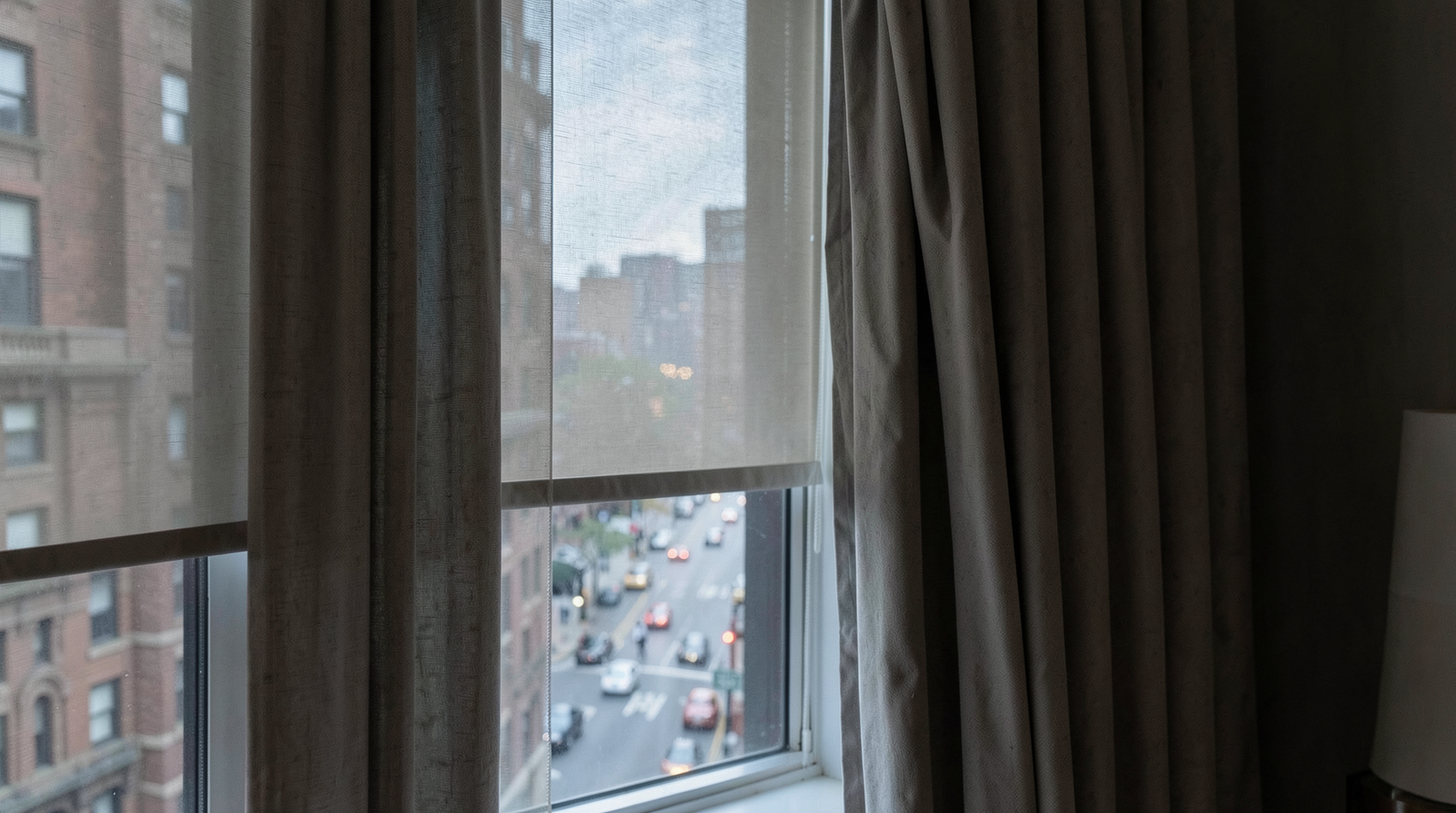

A closed window does not feel closed. A bus pulls away from the curb. A siren carries up an avenue. You can hear the street clearly. You may wonder if blinds could calm the room. Shades raise the same question. Drapery raises that question. The problem may sit in the window itself.
Fabric can help soften the room’s exposure to street noise. It can’t seal a window assembly. A search for Blinds store New York can help you find a local place. You can discuss how a treatment would sit. It would sit around your particular opening. Do that before you choose a style.
Fabric and Air Gaps
Begin with the whole window instead of the glass. Check whether the moving window panel closes flush. This panel is called the sash. See whether light shows around its edges. Note the loudest noise spot nearby.
A treatment hung inside the frame may work well for privacy and glare. It leaves space at both sides. Drapery extending beyond the trim can cover more of the opening. It will not change a loose sash. It will not change a gap letting outdoor air through.
Fabric sets a layer in front of the window. Routes stay open around the sash or frame or meeting rails. Two window sections meet at the meeting rails.
Layering and Coverage
Layering can take some sharpness out of a room. It does not make traffic disappear. A shade paired with drapery adds material. The shade adds coverage in front of the glass. This softens the impression of tire noise. That added coverage dulls bus engines. It dulls voices from the sidewalk.
Extra coverage comes at a cost. Panels that stay closed can reduce daylight. Those panels can narrow the view. Acceptance stays hard in a north-facing room. It already feels dim for much of the day.
Heavier-looking drapery alone isn’t a promise of a quieter room. Coverage shapes what you notice after installation. So do mounting position and the window’s condition.
Mounting Limits
Window geometry often decides what’s realistic before fabric enters discussion. An inward-swinging casement needs room for the handle. The swing requires its own clearance. A radiator under the sill can limit where panels fall. Panels cannot sit as close to the wall.
A few conditions deserve attention before you select anything:
- Older sashes that don’t meet tightly can leave an open path around the window.
- Inward-swinging casements need treatment clearance at the handle.
- Radiator below the sill may rule out floor-length drapery. It may alter the mounting plan.
- Wide trim or uneven plaster can make a close outside mount harder to achieve.
Loose treatments leave more open perimeter around the glass. This fails to make them pointless. Expectation shifts from closing an opening toward adding a softer layer.
Noise Beyond Comfort
Street noise goes beyond apartment annoyance. New York City enforces the city’s noise code. The Department of Environmental Protection enforces the code. The NYPD takes part in enforcement. Residents file noise complaints through 311. The city routes residents to residential noise-control guidance. They want relief from city noise.
Treat persistent noise as a health issue. Skip big claims about window treatments. Federal research on noise-induced hearing loss notes hearing harm. Environmental sounds can harm hearing. Traffic counts among those sounds. Loud or prolonged exposure can cause harm.
Blinds, shades, or drapery give no hearing protection. A bedroom or living room can feel less exposed. Constant street sound is the concern. Weigh that feeling with light control plus privacy.
See also: How to Think About Career Stability When Choosing a Job
Fabric and Harder Fixes
Fabric treatments address one part of the problem. Harder window work addresses another part. Sealing gaps blocks paths air takes around the window. Inserts address the window assembly itself. Changes to the glazing address that assembly. The glass portion of the window is called glazing.
Neither route fits every apartment automatically. A tightly closed window may benefit from broader coverage and softer surfaces. A visibly loose or rattling window needs attention first. Do not expect drapery to change the experience before that.
Separate the decisions if you can. You may choose a treatment for privacy and light control plus a quieter feel. Do not ask it to solve every source of outdoor noise.
Where to Start
Bring the window conditions into the conversation early. Note the clearest place for the sound. Say if the window swings inward. Measure how close the radiator sits to the sill. State how much daylight you are willing to give up with the treatment closed.
The Blinds Source is a local place for an in-person conversation on coverage and mounting. Discuss an inside-mounted shade, outside-mounted coverage, or layered drapery. Ask to see the proposed treatment at the sides, top, and sill.
The answer may be less about a fabric name. Space around it may matter more. A treatment can look right on a sample wall. It can change around deep trim or uneven plaster. It can change on a window needing clearance to open.
Before You Order
Begin with what the window is already telling you. The window shows obvious gaps, a loose sash, an inward swing, radiator clearance. These affect how closely a treatment can cover the opening.
Blinds, shades, drapery can help a noisy Manhattan room feel less bare against the street. This holds particularly for coverage respecting the window’s shape. They are unable to promise silence. They should not be sold that way.
Have the actual window assessed before choosing the treatment.