
What Changed About Window Cords
A looped cord at toddler or cat height can look harmless. It can catch attention. Corded lift systems use a pull cord to raise a covering. That cord lowers the covering. An inner lift cord runs inside a blind or shade. It can become accessible during use. That access is why cordless designs became the default safety recommendation.
The concern is not theoretical. A 1994 release came from the Consumer Product Safety Commission. It associated window-covering pull cords with at least 140 child strangulation deaths. It laid out a redesign effort with the window-covering industry. Options can be compared in person. A search for an electric blinds store in New York can help locate a showroom. Cordless lift systems can be demonstrated there. Motorized lift systems can be demonstrated on site.
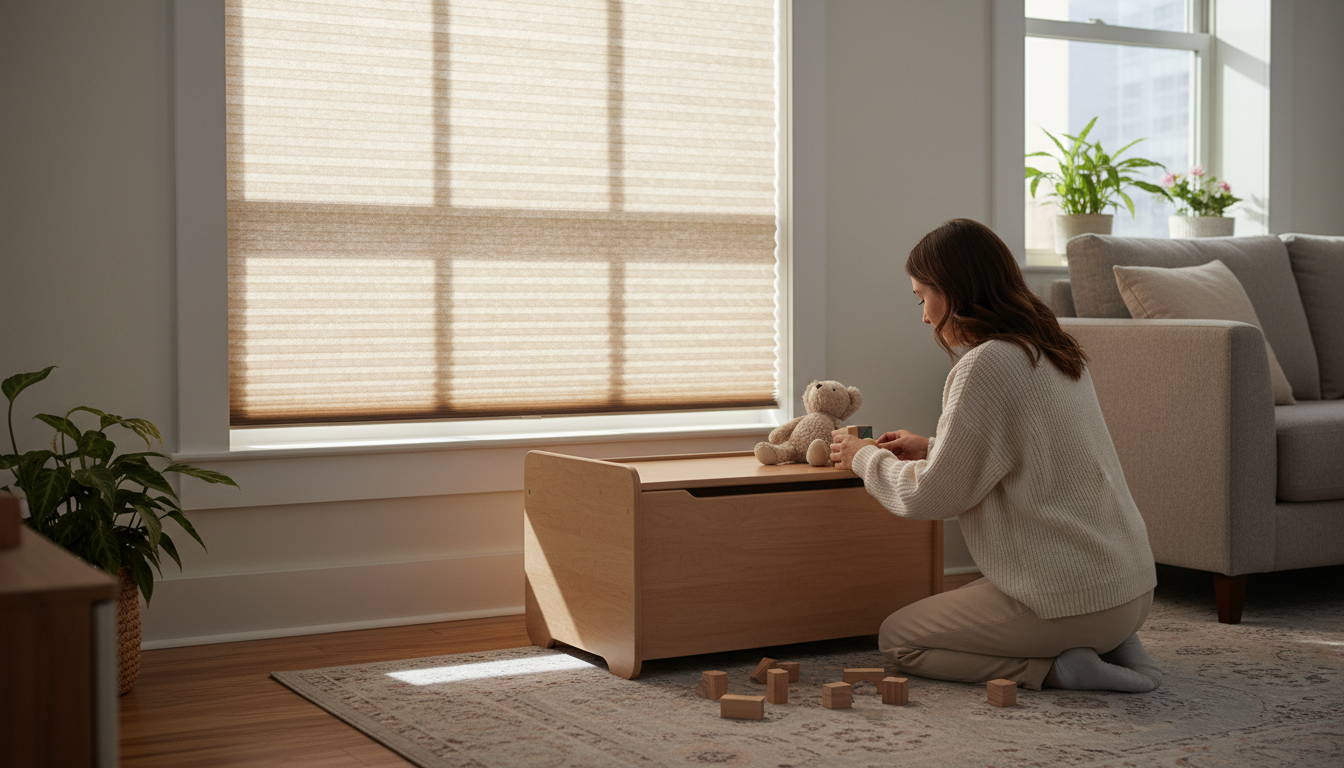
Cordless means there is no hanging operating cord for raising or lowering the treatment. Motorized describes a separate lift method using a motor. It removes accessible operating cords. The distinction matters in a nursery. It matters in a living room with climbing cats. It matters in a prewar bedroom. Windows there sit close to furniture.
What the CPSC Recommends
Federal guidance on this point is direct. Examine every blind and shade for accessible cords. Homes children live in need cordless window coverings. Homes children visit need those coverings. The U.S. Consumer Product Safety Commission’s safety findings give the recommendation its historical context. Regulators do not treat cordless operation as a decorative upgrade.
Give priority to windows with heaviest daily use. One cord stays tucked behind a sofa. Furniture can shift during daily use. That tucked cord then becomes reachable. A radiator cover cord may sit closer to the floor than expected. A low sill cord can hang nearer the floor than expected. Many NYC apartments put a crib, desk, or cat tree under a narrow window.
Cordless options remove daily management of a hanging loop. The need for secure brackets remains. The need for sensible furniture placement remains. They take one obvious point of access out of the window area.
Reading the Cordless Label
Product terms for window coverings turn unclear quickly. A stock product is a ready-made window covering sold in stores or online. A custom product is made for a particular window’s measurements and operating choices. Check how each treatment lifts. Note any cords that stay accessible.
The ANSI/WCMA A100.1-2018 standard covers operating-cord safety for window coverings. Stock products offered in stores and online must be cordless. They may instead use inaccessible or short cords. Those products are about 80% of window coverings sold in the United States. Older installed treatments in an apartment may predate that approach.
Look for the Best for Kids™ label when comparing products. Labeled products have been tested by a third-party laboratory according to a national survey from the Window Covering Safety Council. They have no cords or no accessible cords. The council is an industry coalition. It is not a government regulator. The label is a practical screening tool for shoppers.
Why Action Gets Delayed
Most households already grasp this concern. The Window Covering Safety Council’s 2022 survey found a gap. 90% of adults with children in the home knew the hazard. Certain window-covering cords could pose a strangulation hazard. Only 68% had updated their coverings. The 2018 standard had already taken effect.
That gap makes sense in real homes. Older blinds may raise and lower without trouble. A renovation may have stalled around paint or flooring. A co-op board’s approval process may have stalled a renovation. A working corded blind can feel like a later decision. The room around it now looks different.
Appearance fails to settle the question. Test each treatment at child reach height. Then test that same height for a pet. Search cords hidden behind drapery panels. Find cords caught beside a window air conditioner.
Living with Corded Shades
Replacing older coverings takes planning. Uneven prewar sashes sit inside that planning. Deep trim sits there too. Narrow stairwells matter as well. A cordless replacement needs home measurement. Cord management stays a temporary risk-reduction step. It is not a permanent answer.
- Keep pull cords and inner lift cords out of reach.
- Keep tasseled pull cords short.
- Permanently anchor a continuous-loop cord to the wall or floor. That cord forms a fixed loop.
- Check that a cord stop is installed and adjusted correctly. This small device limits inner cord movement.
These steps can reduce access. They cannot make a corded product cordless. Supreme Shades can discuss cordless choices for households planning a change. They can discuss motorized choices. The discussion is a free in-home consultation. Measurement in your home covers trim. It also covers the furniture. It covers how each treatment needs to operate.
What About Pets?
Pets bring a different concern. A dangling cord can invite chewing. It can become something an animal paws at. The pawing occurs near a favorite perch. It occurs near a sunny window. This differs from the child strangulation hazard described by the CPSC. The same practical question remains. It concerns operation without a loose cord hanging in the room.
Watch the window from the pet’s level. A cord may look out of the way across the room. It may hang beside a sill, bench, or radiator cover. This creates an easy route upward.
Where to Start
We’d start with the coverings already installed. Do not begin from a catalog. Check for exposed pull cords. Also check accessible inner lift cords. Find continuous loops that aren’t anchored. Use the Best for Kids™ label as one shopping filter. Ask how each lift system works.
A free in-home consultation helps. Window treatments need more than width and height. Design measure and install process should account for trim, sill depth and stack depth. Stack depth means the room a raised treatment occupies. It should account for clearance around furniture. Ask to see cordless and motorized options operating on windows like yours. Do that before final selection.